Pragmata (I)
Written on November 28th, 2025 by Dialekti Valsamou-Stanislawski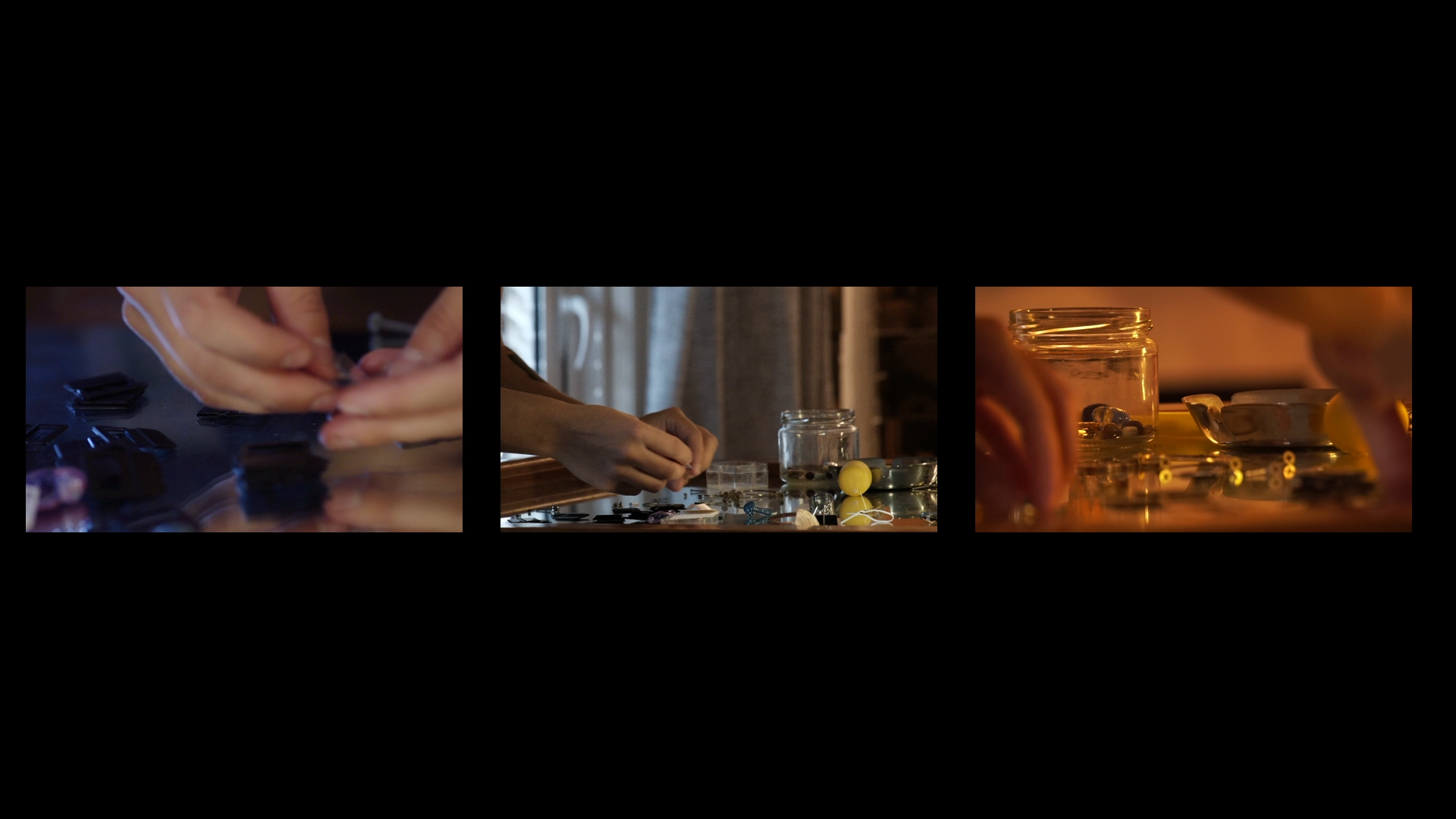
Video Installation
2025
Pragmata (I) is a video installation that unfolds through small gestures and quiet repetitions. Set within domestic spaces, it observes how bodies, objects, and habits form intimate micro-rituals that shape the way we inhabit space and memory.
It is the first of a series of works that are exploring the subject of bodies and objects.
Description
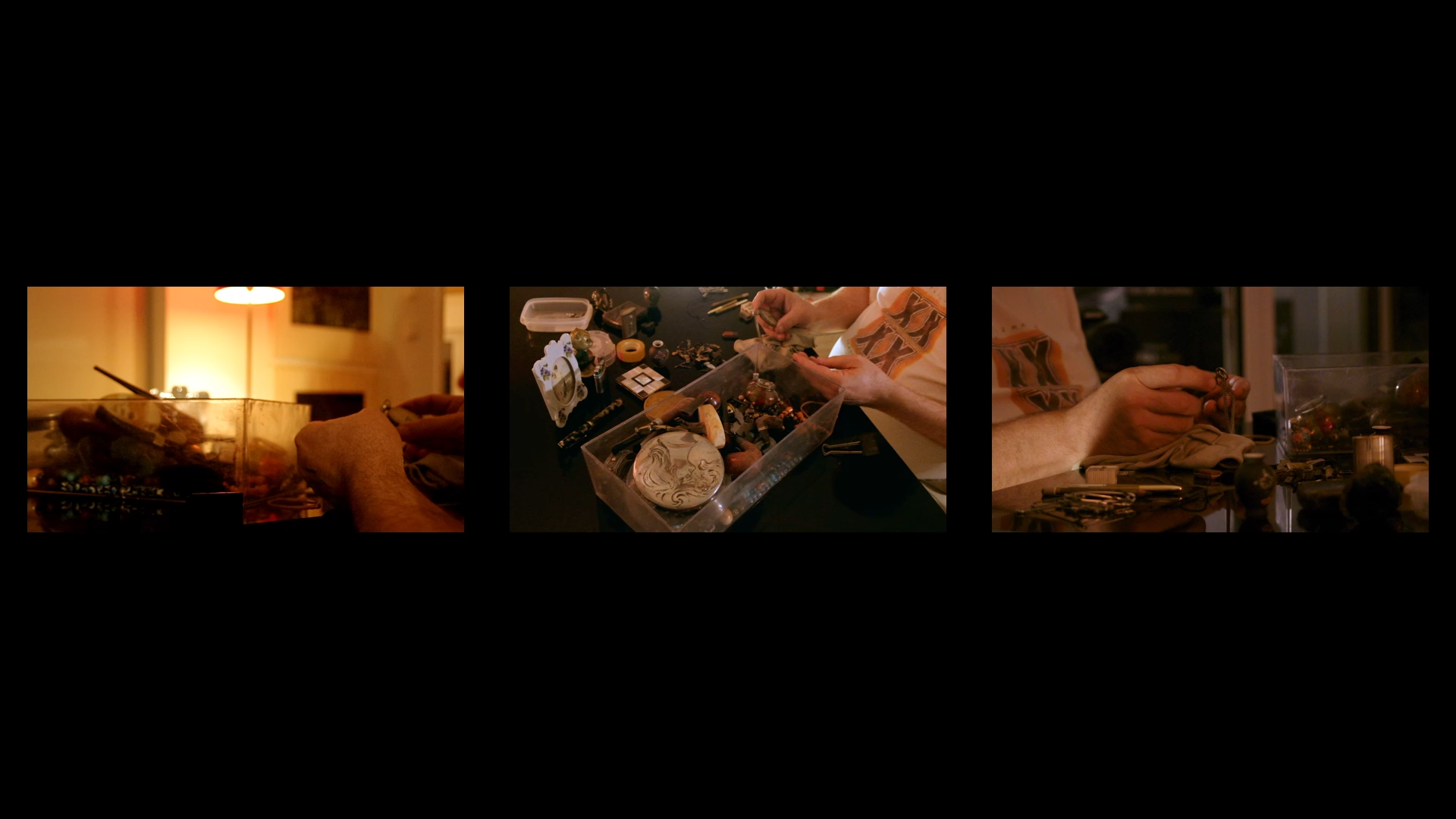
Upon entering the space, the gaze is drawn to the large projection on the right—the only one with sound. Kostas empties boxes filled with family heirlooms: worry beads, small remnants of memory. The three slightly asynchronous frames of the triptych create a subtle echo, a natural soundscape of clicks and minor gestural noises, turning the scene into a calm excavation of his own past.
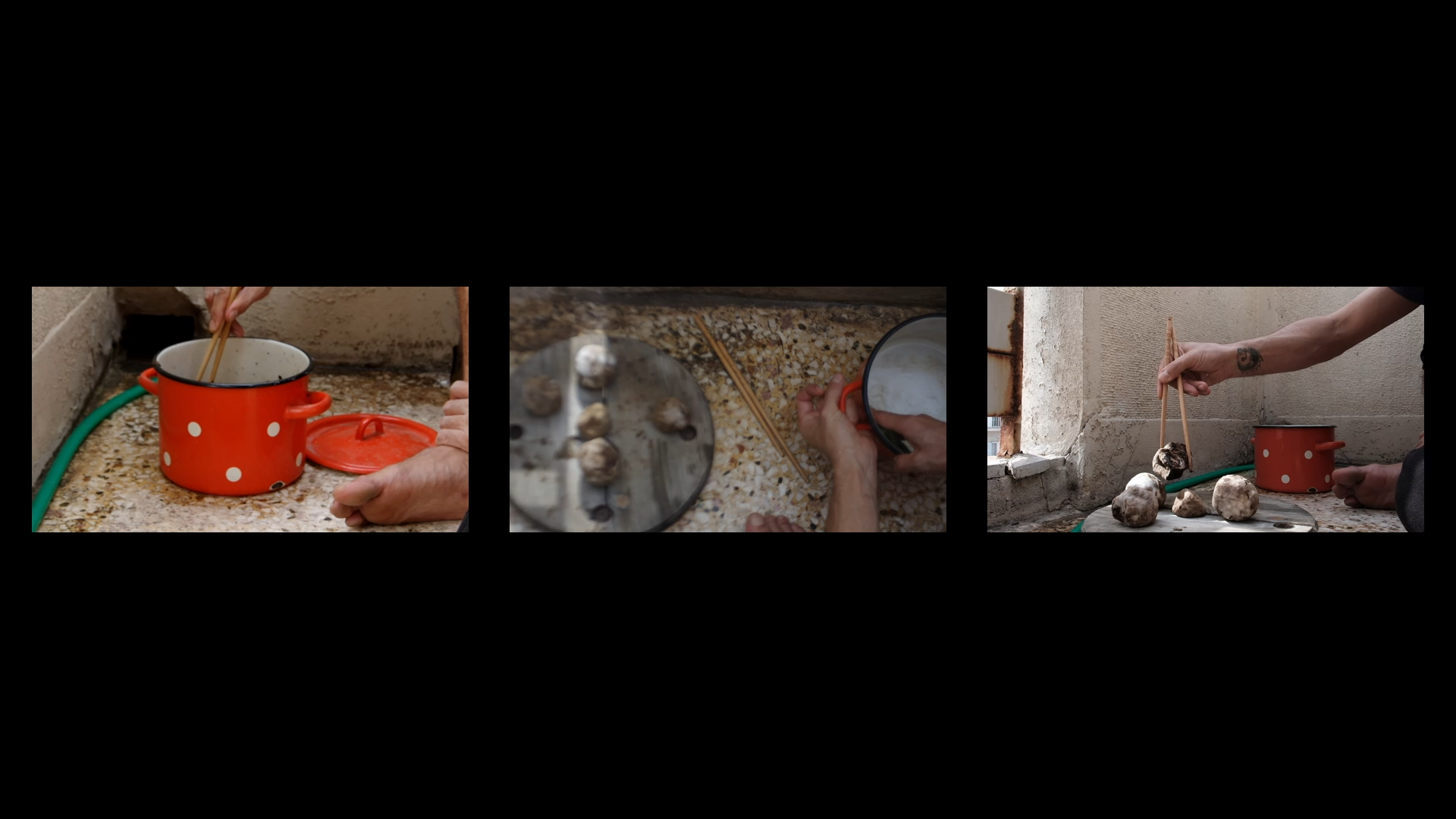
Opposite, a screen shows Dimitris on his balcony, rinsing a pot filled with dried lemons. The running water and repetitive movement form a ritual that is at once mundane and strangely uncanny, completed when he lines them up, with the city of Athens stretching out in the background.
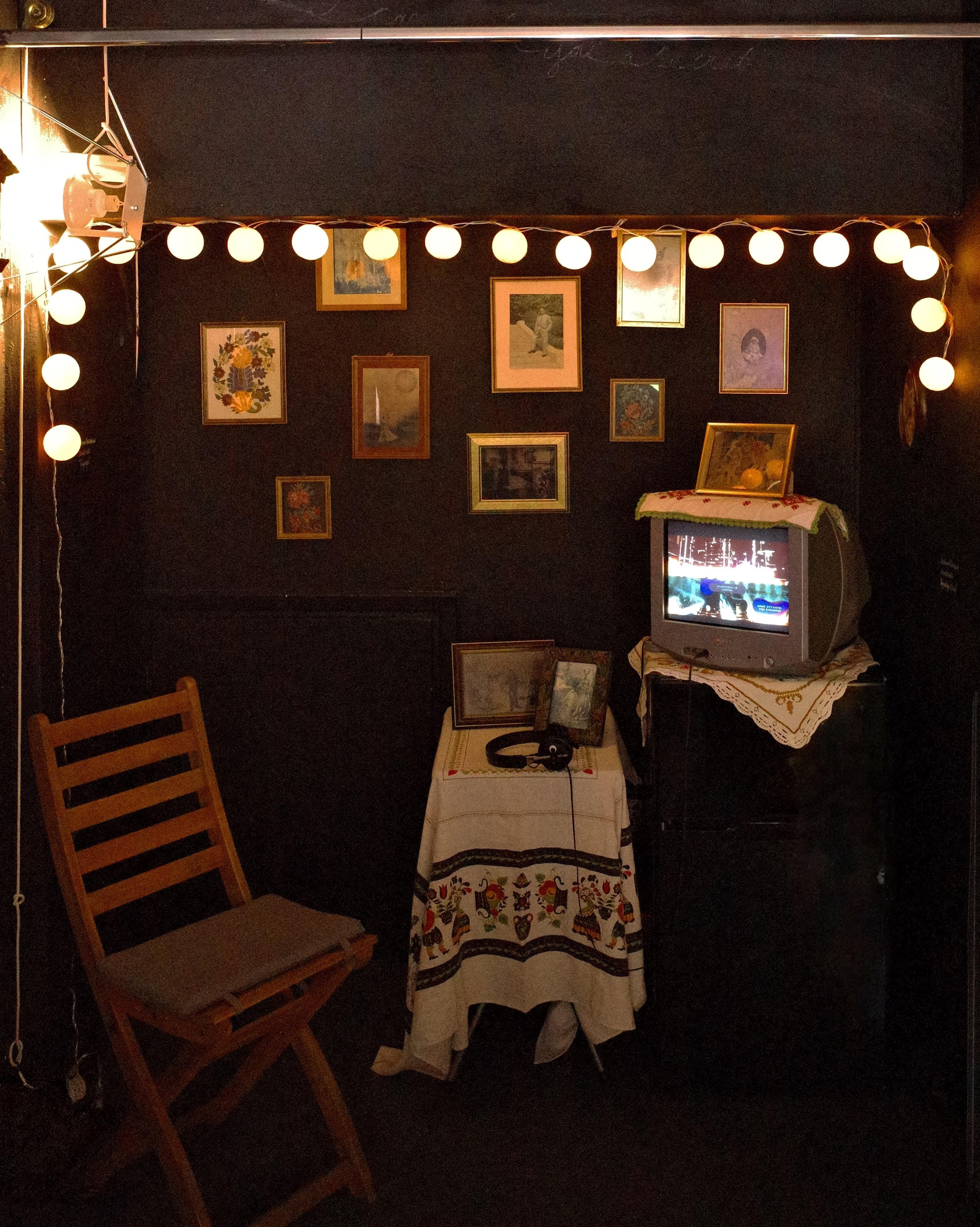
Behind a panel, Anna sorts small objects in her living room, bathed in midday light. The image partially spills onto an open staircase—the space was not “cleaned up,” but left intact, cluttered with objects and piles, allowed to converse with the work as a natural backdrop that receives its gestures. Nearby, three small monitors display moments from Konstantina: brief repetitions, fragments of gestures that resemble memories waiting to surface. Around them, cables and technical equipment remain visible, deliberately undisguised.
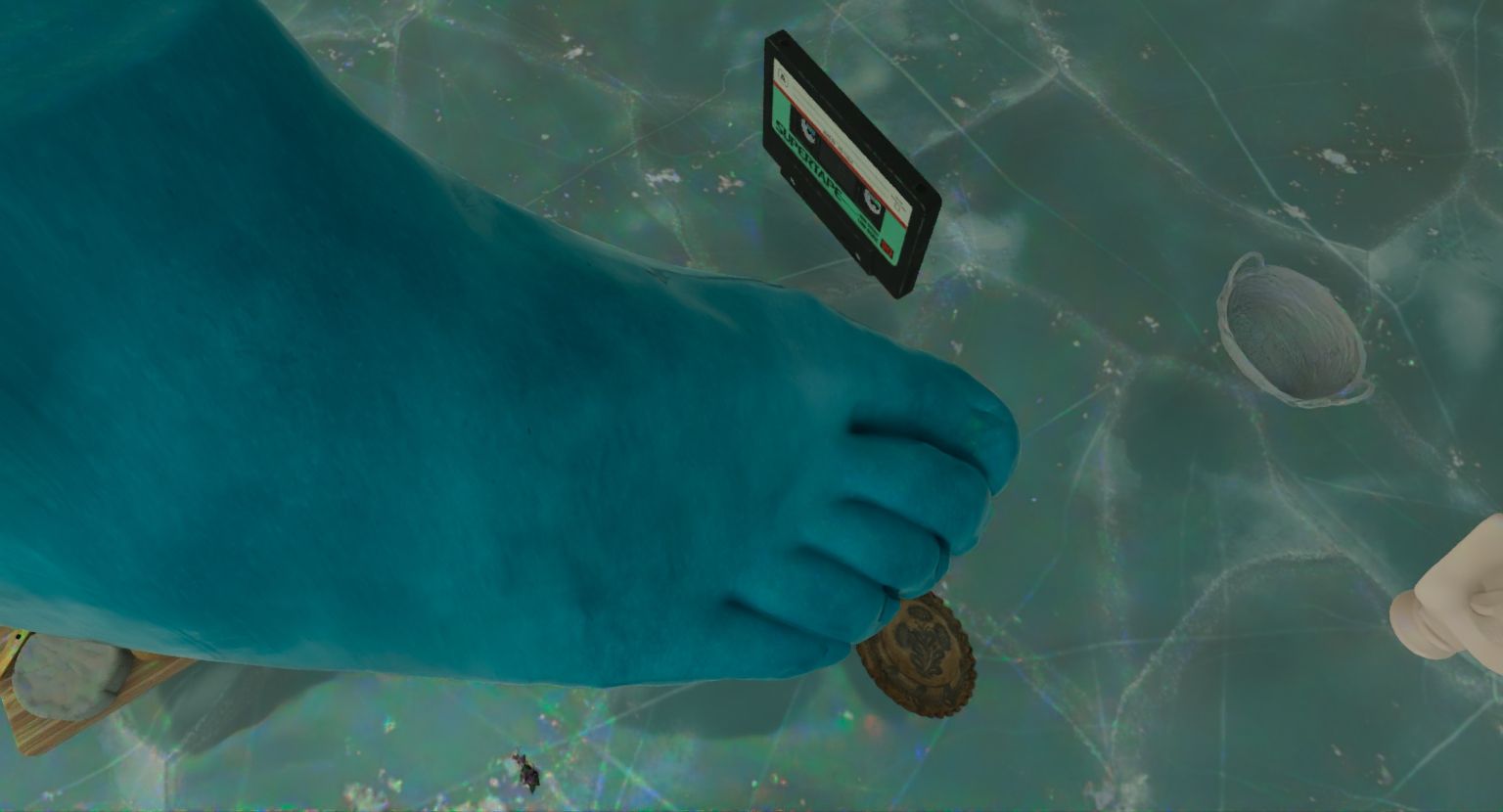
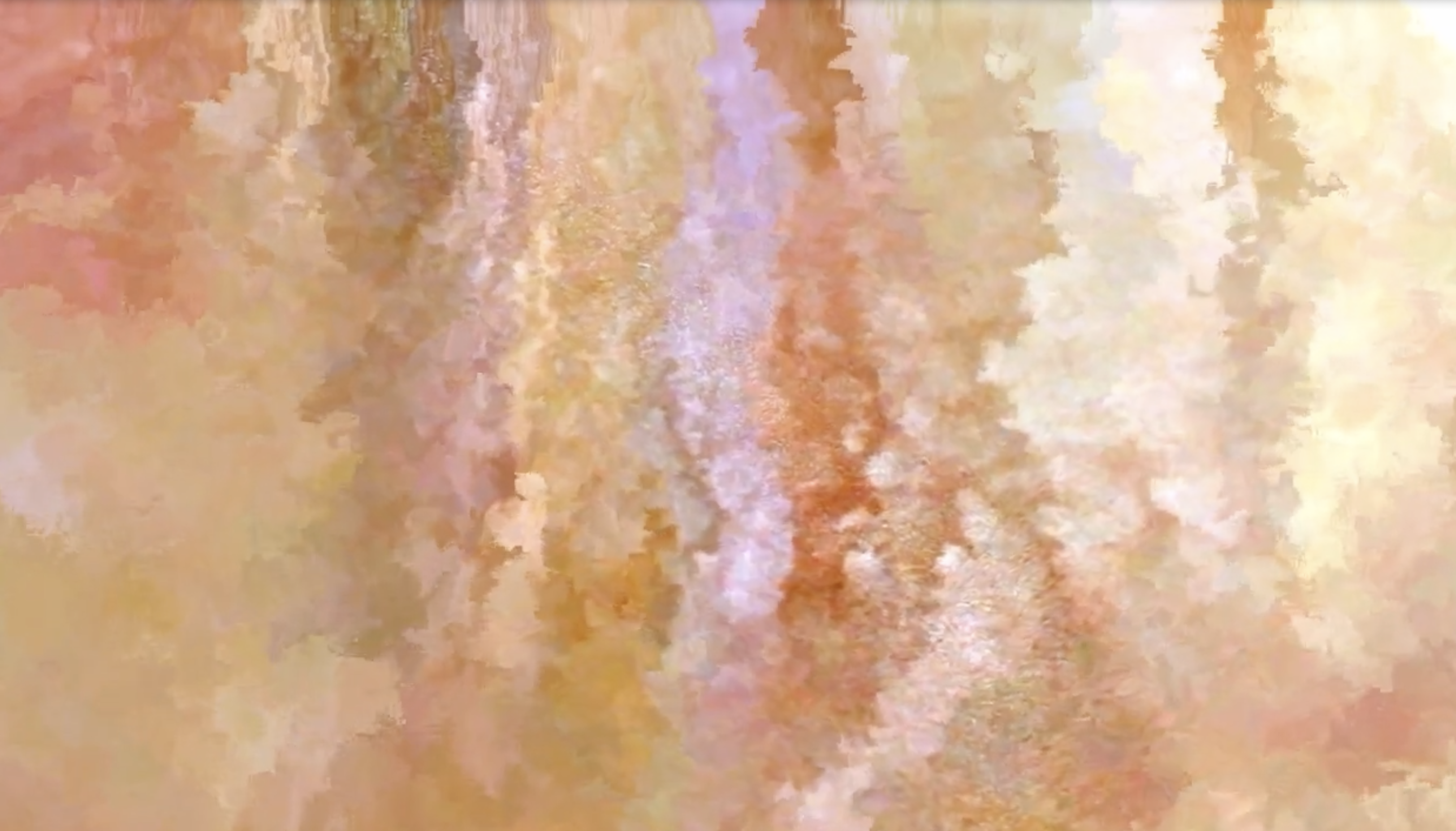
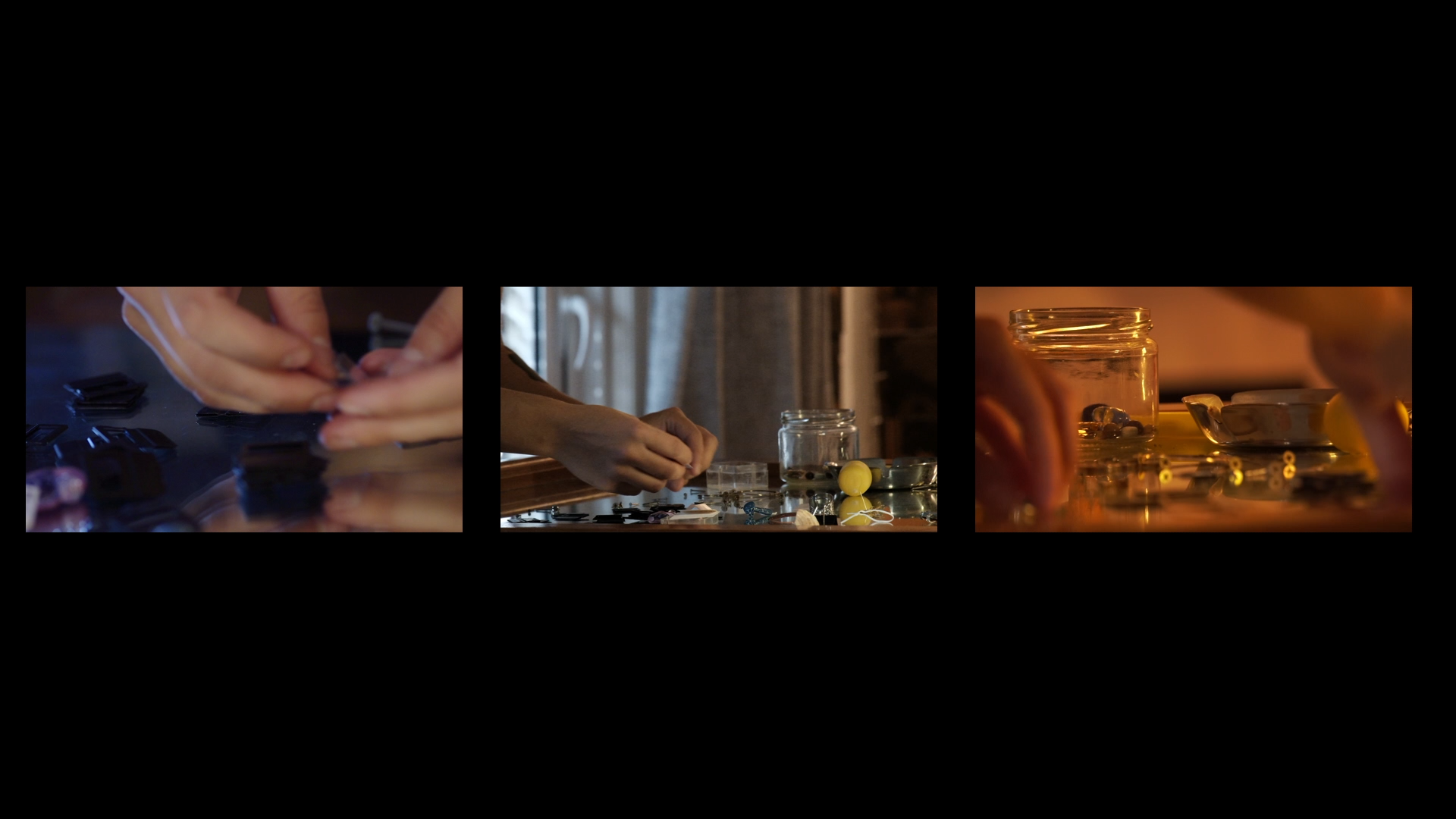
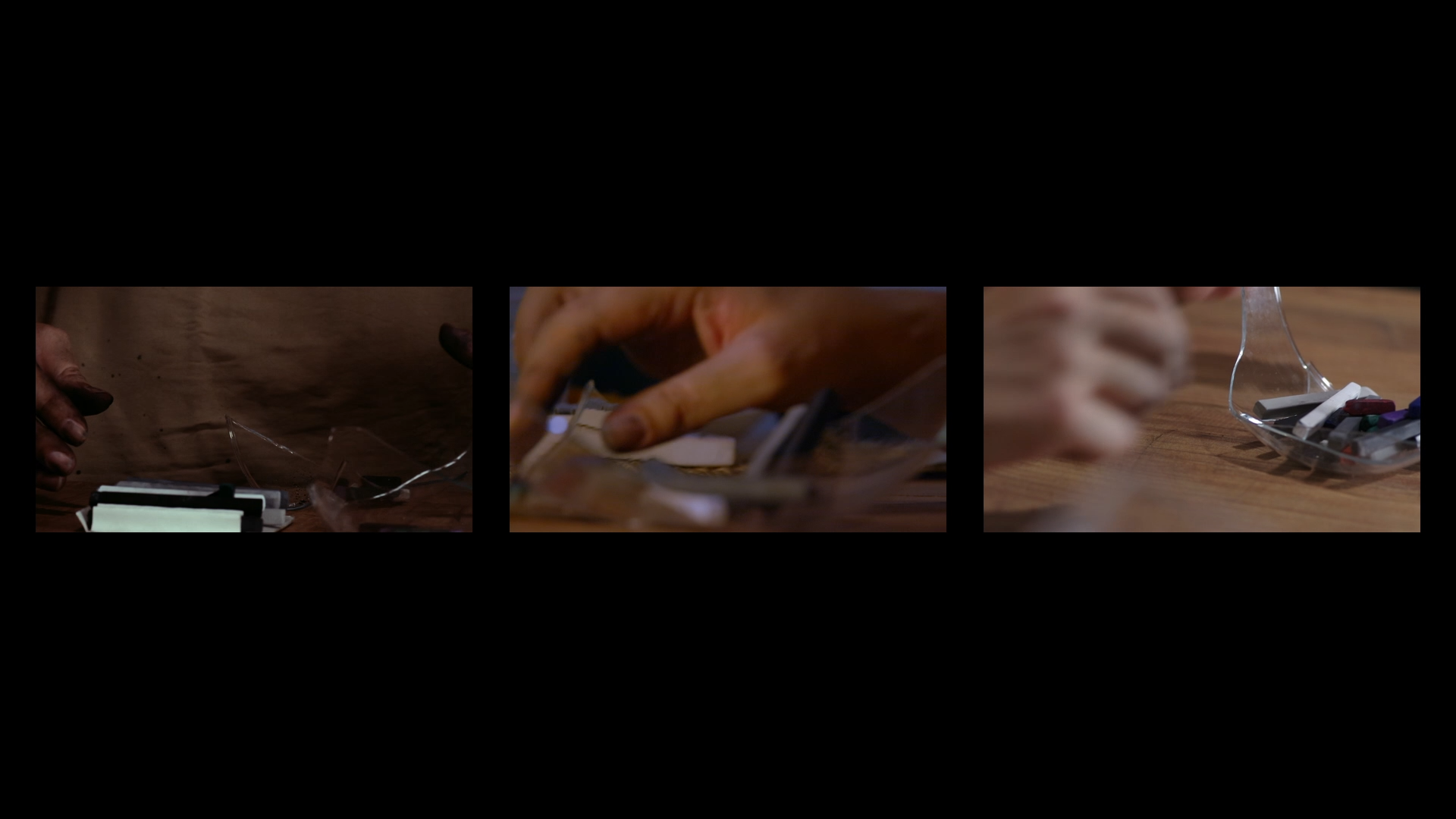
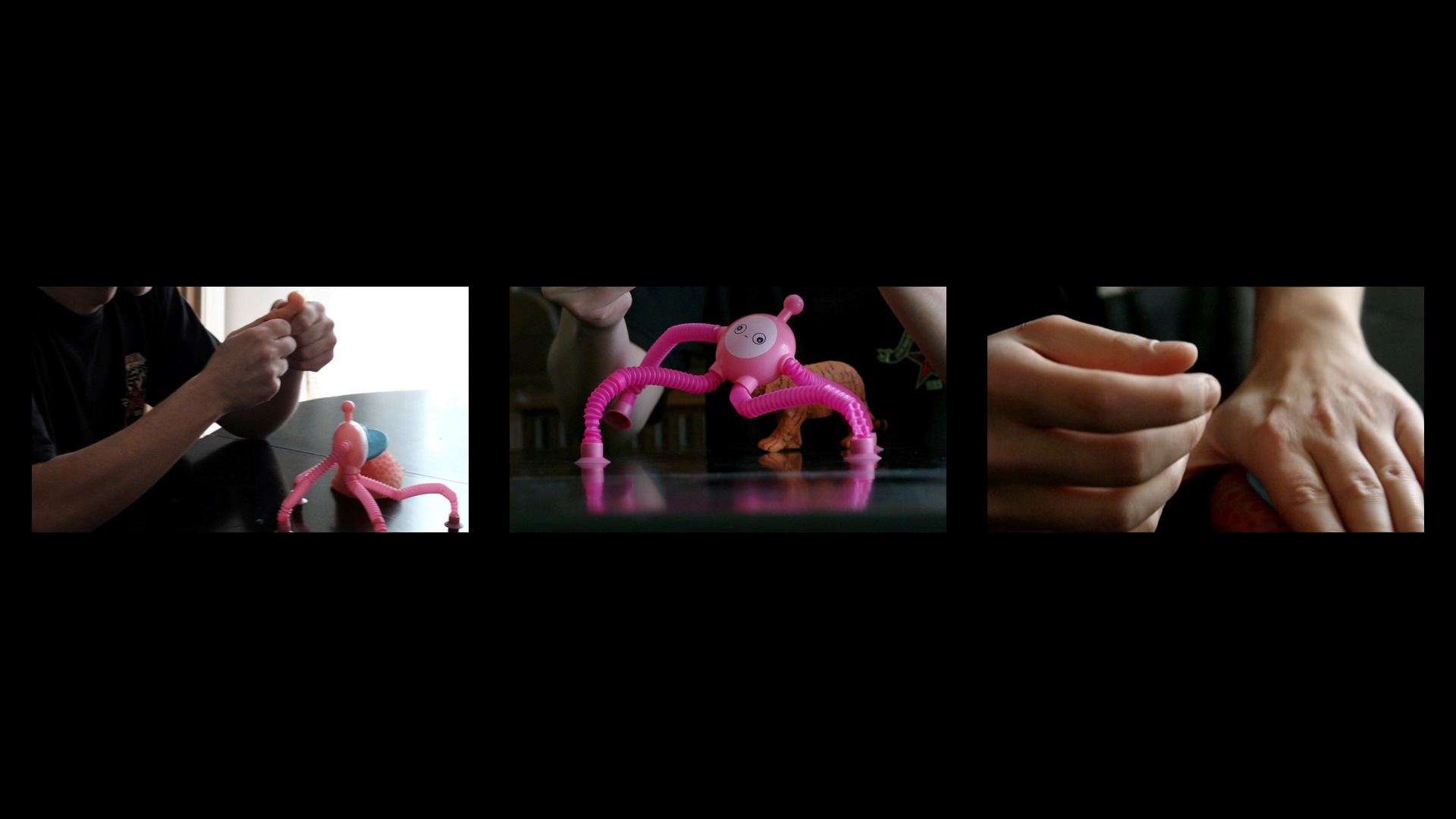
In the storage room, Stergios plays with small anti-stress objects—a prolonged tactile engagement within a space overflowing with what we assume to be stored equipment, metal shelves, and a half-open ladder. Opposite, Konstantina’s triptych presents her movements alongside pastel pigments and a broken glass bowl: intensely tactile, somewhat futile gestures projected among desks and objects already belonging to the environment.
The viewer does not follow a fixed path. One may encounter first a gesture, a colour, a sound. The installation functions as a constellation of small entrances into a world where people converse with their objects, leaving traces of how they inhabit this abstracted space.
All recordings were made in the participants’ homes, following a simple invitation: to do something with their objects. These actions were not staged, but unfolded as they might in an ordinary—perhaps slightly strange—everyday moment. Each encounter was recorded with three cameras in parallel. In Anna’s and Kostas’s videos, time remains almost synchronous; in the others, time is organised through editing. The triptychs last between five and ten minutes, while the “moments” consist of short excerpts of minor movements
Conceptual Framework
The work focuses on the human–object relationship as a dynamic field in which everyday gestures acquire meaning. Parallel, multi-camera recording brings attention to movements that often go unnoticed: small pauses, repetitions, touch, hesitation. In an era where technology compresses manual action into mere control, the installation returns to gesture as an act of intimacy—a small ritual that reveals how each body relates to its objects.
The distinction between use and possession, as described in Jean Baudrillard’s The System of Objects, becomes visible through the images. Objects appear not only as tools but as carriers of memory, stability, and role. The cherished object—the objet aimé—is discernible in its worn texture, in the way it is held, in the insistence of the movements that surround it. Gestures do not simply serve a need; they often function as acts of care, or as mirrors reflecting an image of the self back to the individual.
The smaller secondary projections offer a parallel reading, isolating these gestures and presenting them as fragments of a personal mythology. A finger repeating the same motion, an object returning again to the hand, a subtle act of sorting—all become signs of a relationship that is at once practical and emotional.
The installation thus stages a three-way exchange: between the individual and their objects, the artist who translates this relationship into images, and the viewer who re-interprets what they see. These layers form a mise en abyme, in which “subject” and “object” constantly shift positions. The exhibition space itself—already filled with its own objects, functional, accidental, latent—was not cleared. Instead, it was incorporated. The projections do not impose themselves upon it but are framed by it, as yet another system of objects.
In this way, the work does not merely document people in their homes, but traces a map of everyday embeddedness in the world of things—where gesture, habit, and small ritual compose the way each person inhabits their space, and allows that space, in turn, to inhabit them.
Installation Video
This installation was first shown at the Plateau room of the MA DArts at the Athens School of Fine Arts. You can view the documentation video below:
Video Stills
Below, you can see some stills from the videos that are parts of this series and were used for this installation.
Anna
Konstantina
Stergios
Dimitris
Kostas